Launch students into space science with this hands-on engineering challenge exploring how and why the Moon orbits Earth! In this lesson, learners investigate gravitational force and motion to understand what keeps the Moon in orbit. Using this knowledge, students design and build a model that demonstrates a realistic Moon orbit around a globe, experimenting with stability, circular motion, and balance. The process of designing a working orbit model helps students visualize complex space concepts, and the interactive testing makes learning about celestial motion truly out of this world!
1
Introduce the challenge
2
Explore possibilities
3
Create
4
Improve & share
At a glance
Grades
3rd Grade, 4th Grade, 5th Grade
Subject
Art
Theme
Historical/Cultural
Formats
Digital Lesson, Mini Lesson
Time
60–75 minutes · splits into two sessions
Standards
VA:Cr1, VA:Cr2, VA:Cr3, Social Studies See details
File type
PDF (print or project)
Standards & planning
Where it fits: This lesson is designed to enhance knowledge gained during a seasonal or social studies unit.
National Core Arts Standards: Visual Arts, Creating
VA:Cr1Generate and conceptualize artistic ideas and work.
VA:Cr2Organize and develop artistic ideas and work.
VA:Cr3Refine and complete artistic work.
Social Studies
Social StudiesConnects to your state’s social studies standards (varies by state).
Student work examples
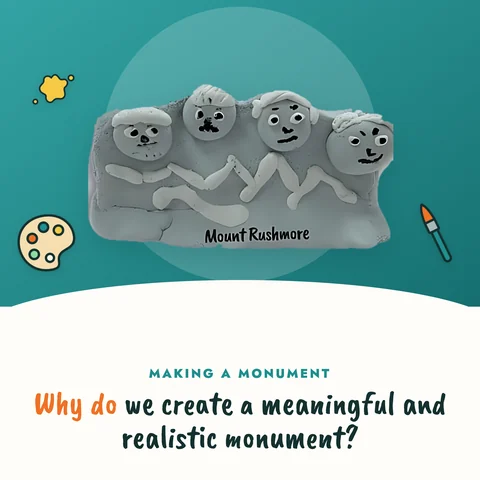
Student workReal student work from Making a MonumentWhat’s includedA quick tour of the full Digital LessonWhat’s includedShows the full Digital Lesson. The Mini Lesson has the same core pages, shorter.